


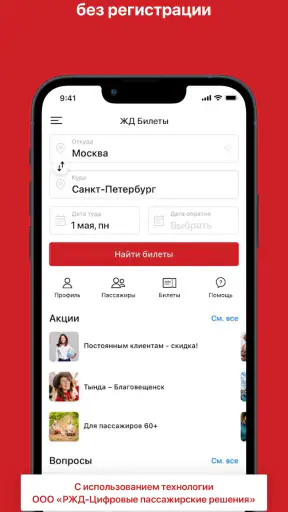
Planning a train journey in Russia can feel more complicated than the journey itself, especially when you are comparing departure times, checking available seats, and trying to complete a purchase from a phone. ЖД Билеты Онлайн is built for that particular task: buying railway tickets online for Russian trains, including Sapsan, Lastochka, and Strizh services. I found it most useful as a focused travel companion rather than a general trip-planning app. It keeps attention on the part many travelers need to finish quickly: finding a suitable train and securing a ticket.
The app is free, belongs to the Travel & Local category, and is developed by UFS ltd. Its store rating sits at 4.3 from around 23 thousand ratings, while its install count has passed one million. Those figures suggest that it has become a familiar option for people booking rail travel, but popularity does not make every booking effortless. In my experience, the real value comes from using it with a clear plan and checking each passenger and journey detail carefully before paying.
What to expect when you open the app
The first thing to understand is the app’s scope. This is not the kind of travel tool I would open to build a complete holiday itinerary, compare hotels, or organize sightseeing. Its purpose is narrower and more practical: railway ticket purchasing. That focus is helpful when I already know that the train is the right way to travel and want to move from a vague plan to a confirmed booking.
The listed short description is in Russian, “ЖД Билеты Онлайн,” so first-time users should expect a Russian railway-booking context throughout the experience. Even if you are comfortable with travel apps in general, station names, train categories, carriage information, and passenger details deserve extra attention. A familiar-looking booking screen can still hide important distinctions between departure stations or train types.
I would approach the app with four pieces of information ready: the departure city, the arrival city, the travel date, and the number of passengers. Having these prepared makes the first search much less stressful. If you are booking for someone else, keep the passenger’s identity document details nearby instead of trying to remember them while moving through the form.
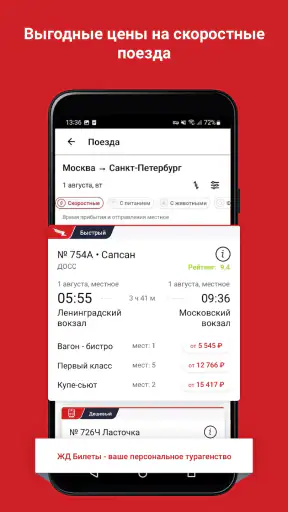
The app covers well-known Russian services such as Sapsan, Lastochka, and Strizh. That is especially relevant for intercity trips where the service name influences the journey experience. A fast train may be attractive because of its schedule, but the cheapest or earliest result is not automatically the right one. I recommend looking at the complete departure and arrival times, the number of changes if shown, and the seating or carriage information before choosing.
One useful mindset is to treat the search results as a decision screen, not merely a list of prices. A departure that saves money may arrive at an inconvenient hour, while a slightly different service may fit a workday or airport connection much better. The app is strongest when it helps me make that comparison in one place, but the quality of the decision still depends on reading the details rather than tapping the first available option.
Who will get the most from it
I think the app suits people who already know they want to travel by train and prefer to handle the booking from a mobile device. It is a good match for repeat travelers, commuters arranging longer journeys, and visitors who want one focused place for Russian rail tickets instead of searching through unrelated travel content.
It can also help when plans are still flexible. Searching several dates or comparing different departure times may reveal a more convenient option than the one you first had in mind. I would use it before committing to hotel check-in times or airport transfers, because the train schedule should shape the rest of the day.
On the other hand, I would not choose it as my only planning tool if I need broad destination research, local transport advice, or a complete itinerary. Someone who wants maps, attractions, lodging, and rail tickets in one unified trip planner may prefer a broader travel service. This app’s focused design is an advantage for ticket purchase, but it also means that wider travel decisions remain outside its main purpose.
Getting ready for the first booking
The application supports Android devices running version 6.0 or later, so it is available to people using many older phones as well as newer models. That broad compatibility is reassuring if you do not have a recent handset. Still, I would avoid beginning an important booking with a nearly empty battery or an unreliable connection. A ticket purchase is not the moment to discover that the phone cannot stay online long enough to finish the process.
After installing it, I would start with a simple one-way search rather than a complicated group journey. Choose the departure and destination carefully, then select the date. This first pass is not only about finding a train; it is a way to learn how the app presents services, times, seating choices, and the information needed before payment.
Before entering passenger information, check the cities again. Large cities can have more than one relevant station, and a station that looks close on a map may not be convenient for your actual starting point. I have learned that a booking can be technically correct and still be inconvenient if the station is on the wrong side of a city or requires an unexpected transfer.
For a solo traveler, the process should be easier to control because there is only one passenger record to review. For a family or group, slow down deliberately. Put the details for each traveler in a small note before opening the form, and keep the spelling consistent with the identity document that will be used for the journey. This is one of the most important practical habits because a rushed entry is harder to notice once several passengers have been added.
My best first-use tip is to separate searching from purchasing. Search once to understand the available options, then return to the preferred result and begin the booking with the final choice in mind. This reduces the chance of selecting a train simply because it appeared first or because the screen changed while you were comparing alternatives.
Turning a search into a meaningful result
The first successful action I would aim for is not necessarily payment. It is finding a train that genuinely fits the trip and understanding why it fits. Look at the departure time, arrival time, service name, and seat or carriage options together. If the app displays different fare or seating choices, compare what you receive for each one instead of treating the lowest amount as the automatic winner.
This matters particularly with popular services. Sapsan, Lastochka, and Strizh can serve very different travel patterns, and the best choice depends on the day, your schedule, and how much flexibility you have. A morning departure may be ideal for reaching a meeting, while a later train may be better if you are connecting from another part of the city. The app can show the rail options, but only you can judge whether the full day works around them.
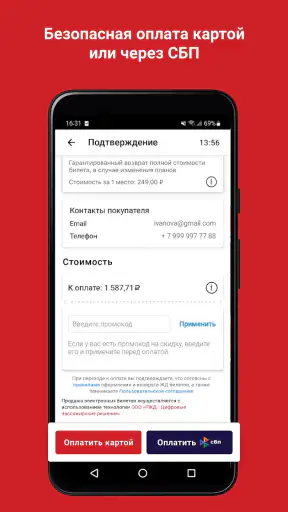
Once the train is chosen, enter passenger details slowly. I recommend reviewing names, document information, birth details where requested, and the selected seat before moving forward. Do not assume that a typo will be harmless because the route and date are correct. Ticket information is personal, and accuracy is more valuable than saving a few seconds.
After the purchase is complete, keep the confirmation information easy to find. I would take a screenshot only as a backup and still retain the original booking information inside the app or in the relevant confirmation message. A screenshot can be useful when the connection is poor, but it should not replace checking the actual booking details before the travel day.
A realistic example would be a traveler leaving for a work appointment in another city. I would search the route, compare an early Sapsan with a later alternative, choose the service that leaves enough time for the appointment, enter the passenger details from the identity document, and inspect the seat before paying. The meaningful success is not simply owning a ticket; it is having a booking that supports the rest of the day without an avoidable station or timing mistake.
Details that deserve a second look
One of the less obvious trade-offs in mobile ticket booking is speed versus verification. A small screen encourages quick taps, especially when availability appears limited. However, rushing can lead to the wrong date, a mistaken direction, or an unsuitable seat. I would rather spend an extra minute reviewing the summary than begin a trip with a correction problem.
Another useful habit is to compare the train’s arrival time with your next obligation, not just the departure time. Travelers often focus on leaving early and forget the time needed to reach a hotel, meeting, airport, or connecting station after arrival. A train that looks attractive in isolation may be poor when the whole day is considered.
For group bookings, decide in advance whether sitting together is essential. If it is, inspect the seating choices before entering every passenger detail, where possible, and be prepared to reconsider the train if suitable seats are not available. If sitting together is less important, accepting separate seats may preserve a better departure time. That is a practical trade-off the app cannot decide for you.
Common points of confusion for first-time users
The most likely confusion is the difference between a train service and a station. Seeing a familiar city name does not always mean the departure point is convenient. I would verify the station against a map or local transport plan before finalizing the booking, particularly for an early departure or a late arrival.
Passenger information can also feel more demanding than booking a cinema seat or a local bus. Railway tickets are tied to the traveler, so the form should be treated as an accuracy task. If you are booking for a child, a relative, or a colleague, do not rely on nicknames or casual spelling. Use the details that match the traveler’s official document.
Another question many new users have is whether the app is suitable for every kind of journey. Its confirmed focus is online railway tickets in Russia, with Sapsan, Lastochka, and Strizh specifically highlighted. I would therefore use it for those rail-booking needs, but I would not assume it replaces a local transit app, an international rail planner, or a general travel marketplace.
Some users may also wonder whether they should install it if they only travel once. Because it is free and supports Android 6.0 and later, it can be reasonable for a single booking when the route fits its purpose. If you dislike installing dedicated apps for occasional tasks, a browser-based alternative or a wider travel service may feel more convenient. The better choice depends on whether focused access is more valuable to you than keeping everything in one place.
The age rating is Everyone, which makes the app broadly suitable from a content perspective. That does not remove the need for adult supervision when a child is traveling or when another person’s identity information is being entered. The rating describes accessibility of the app’s content, not the complexity of making a real travel purchase.
The current version is 47.0.10687, and the app has been available since March 10, 2013. I see that long presence as a reason to consider it an established rail-booking option, but not as a guarantee that every phone or booking situation will feel identical. Keeping the app updated is sensible, especially before a trip, because travel tools need to work reliably when schedules and availability matter.
Where another option may be better
I would look elsewhere if my main need were a complete travel package. A general travel app may be better for comparing trains with flights, hotels, rental cars, and local transport in one search. Likewise, someone traveling outside the Russian rail network may need a service designed for international routes rather than this focused Russian booking context.
I would also hesitate to depend on it alone when a journey involves several separate tickets, unusual connections, or complicated changes. In that situation, a broader planner can make the relationship between each leg easier to understand. The app remains useful for the individual railway purchase, but it may not be the best place to coordinate the entire route.
There is a human limitation too: a dedicated ticket app cannot explain every local travel decision. It may help me choose a train, but I still need to check how to reach the station, how much time to allow for boarding, and what to do if plans change. That is not a flaw unique to this product; it is simply the boundary between ticket booking and complete travel support.
My next-step routine before travel day
After booking, I would reopen the journey details and confirm the date, departure station, arrival station, passenger name, and seat. I would then plan the trip to the station separately, allowing more time if the departure is early, the city is unfamiliar, or I am carrying luggage. This second review catches the kind of mistake that is easy to miss immediately after payment.
If I am traveling with someone else, I would share the essential journey information with that person rather than assuming they can access my phone. Include the train service, departure time, station, and passenger details needed for the trip. This is especially helpful when one person makes the booking but another person is the actual traveler.
For repeat use, I would build a small personal checklist around the app: confirm the route, compare the full schedule, verify the station, enter document details carefully, inspect the seat, and save the confirmation. That workflow is more valuable than simply knowing where the search button is. It turns a quick mobile purchase into a controlled travel decision.
The app is free, which removes the usual barrier to trying it for a route that matches its purpose. Still, free access should not encourage careless booking. The cost of an incorrect date or wrong passenger detail can be far more inconvenient than the time saved by skipping the review screen.
After using it, my view is that ЖД Билеты Онлайн is best when you want a direct path from a Russian rail search to a ticket purchase. It is not trying to be a complete travel organizer, and I would not judge it by that standard. Its strengths are its focused purpose, support for prominent Russian train services, broad Android compatibility, and the convenience of handling the booking from a phone.
Its limitations are equally clear: the traveler must pay close attention to stations, passenger data, seating, and the wider journey plan. People who want international coverage or one app for every travel need should consider a broader alternative. For a first-time user whose route fits the app, though, I would recommend starting with a simple search, checking every detail twice, and using the resulting ticket as the foundation for the rest of the trip rather than treating the booking as the end of the planning process.


